Professional Tools and Equipment
Professional tools and equipment sit at the heart of every trade, workshop, construction site and industrial facility. From a cordless drill used by a contractor to a CNC machine running in a manufacturing plant, these tools share one defining trait: they are built to perform reliably under demanding, repeated use. This page explains what sets professional-grade equipment apart, how the main categories are organized, and how to make informed decisions whether you are equipping a first workshop or upgrading an established operation.
What Makes a Tool « Professional »?
The difference between a consumer tool and a professional tool is not just marketing. It comes down to engineering choices that affect longevity, precision and safety.
- Duty cycle: professional tools are designed for continuous or near-continuous use, with better heat dissipation and reinforced components.
- Build quality: metal gear housings, brushless motors, sealed bearings and impact-resistant casings are common at the professional level.
- Precision and tolerances: measuring instruments, cutting tools and alignment equipment meet stricter accuracy standards.
- Safety and compliance: professional equipment must meet recognized standards such as OSHA requirements in the United States or CE marking in Europe.
- Serviceability: replaceable parts, available repair networks and multi-year warranties support long-term ownership.
A useful analogy is footwear: a hiker may wear sneakers occasionally, but a roofer needs boots built for eight hours a day, every day. The same logic applies to tools.
Main Categories of Professional Tools and Equipment
Power Tools
Power tools convert electrical, pneumatic or battery energy into mechanical work. Cordless platforms have largely transformed this category, with lithium-ion and newer battery chemistries allowing a single battery system to drive drills, impact drivers, saws, grinders and more. Key considerations include torque, speed range, weight and battery ecosystem compatibility.
Hand Tools
Wrenches, pliers, hammers, screwdrivers and sockets remain indispensable. Professional hand tools are typically forged from chrome-vanadium or chrome-molybdenum steel, hardened and finished to resist corrosion. For many technicians, a well-organized hand tool set is the backbone of daily work.
Measuring and Layout Instruments
Accuracy begins with measurement. This category includes tape measures, calipers, micrometers, laser distance meters, levels, theodolites and laser levels. In fields like machining, surveying and electrical installation, instrument accuracy directly affects the quality and compliance of the final work.
Heavy Machinery and Industrial Equipment
At the larger end of the spectrum, you find excavators, forklifts, compressors, generators, welding machines and material handling systems. These purchases involve capital budgeting, operator training, maintenance contracts and often regulatory inspection schedules.
Workshop and Jobsite Support Equipment
Tool storage, workbenches, dust extraction, lighting, ladders and scaffolding rarely get the spotlight, but they determine how efficiently and safely work gets done. A well-designed storage system alone can save a technician meaningful time every day.
How to Choose the Right Equipment
Selecting professional equipment is a balancing act between performance, budget and long-term cost of ownership. A structured approach helps avoid expensive mistakes.
- Define the actual workload. Estimate frequency of use, materials involved and required precision. A tool used daily justifies a higher investment than one used monthly.
- Check compatibility with your existing setup. Battery platforms, consumables, attachments and software ecosystems matter more than many buyers expect.
- Compare total cost of ownership. Include batteries, blades, filters, calibration, repairs and downtime, not just the purchase price.
- Verify safety certifications and ergonomics. Weight, grip, vibration levels and noise output affect both operator health and productivity.
- Assess after-sales support. Availability of spare parts, local service centers and warranty terms can make or break the ownership experience.
Consider a small electrical contracting business choosing between two impact drivers. The cheaper model lacks brushless motor technology and battery sharing with the rest of the fleet. Over several years, the extra batteries, slower workflow and earlier replacement end up costing more than the higher-priced alternative. This kind of forward-looking comparison is the essence of smart equipment purchasing.
Safety: A Non-Negotiable Priority
In professional settings, safety is not optional and not merely a matter of good practice; it is a legal and organizational requirement. Employers in the United States, for example, operate under OSHA general duty requirements, while many other jurisdictions enforce equivalent frameworks. Beyond compliance, safe equipment use protects the most valuable asset on any site: people.
- Inspect tools before each use: check cords, guards, handles and batteries for damage.
- Always use the appropriate personal protective equipment (PPE) for the task: eye protection, hearing protection, gloves rated for the hazard, and respiratory protection where dust or fumes are present.
- Follow lockout/tagout procedures when servicing powered equipment.
- Keep guards and safety interlocks in place and functional.
- Train every operator and document that training.
An often-overlooked point is that modern safety features, such as anti-kickback systems, electric brakes and automatic shut-offs, are now standard on many professional tools. Prioritizing these features is both a safety decision and a productivity decision.
Maintenance and Longevity
Professional equipment rewards those who maintain it. A consistent maintenance routine extends service life, preserves performance and protects warranty coverage.
- Clean after use. Remove dust, chips and debris, especially from vents, rails and moving parts.
- Lubricate according to the manufacturer’s schedule. Wrong lubricant or excessive application can cause as much harm as none.
- Inspect and replace consumables. Dull blades, worn brushes and degraded batteries reduce quality and increase strain on the tool.
- Calibrate measuring instruments periodically. Torque wrenches, calipers and levels drift over time and with handling.
- Store properly. Dry, organized storage prevents corrosion and damage, and makes inventory control possible.
A simple habit worth adopting: keep a maintenance log per tool, noting service dates, repairs and calibration. When equipment eventually needs resale or insurance documentation, this record adds real value.
Current Trends Shaping the Industry
Several developments are redefining professional tools and equipment, and staying aware of them helps buyers future-proof their investments.
- Battery electrification: cordless platforms are replacing corded and gas-powered equipment, including in heavy categories like plate compactors and cut-off saws.
- Brushless motor technology: longer runtime, less heat and reduced maintenance have become the professional standard.
- Connected tools: asset tracking, usage data and tool management software help companies control inventory and prevent loss.
- Ergonomics and noise reduction: lower vibration and lighter designs address long-term occupational health concerns.
- Sustainability: repairability, rechargeable systems and reduced emissions increasingly influence public and private procurement.
Frequently Asked Questions
Is professional equipment always worth the higher price?
Not always. The deciding factor is usage intensity. For occasional tasks, a high-quality mid-range tool may be perfectly adequate. For daily, revenue-generating work, professional-grade durability and support usually pay for themselves.
Corded or cordless?
Cordless tools now cover most professional needs and offer unmatched flexibility. Corded equipment still holds advantages for sustained stationary work where constant maximum power matters, such as bench saws and some stationary machinery.
How long should professional tools last?
With proper care, quality hand tools can last decades, while power tools typically provide many years of service. Heavy machinery lifespan depends heavily on maintenance discipline and operating conditions, which is why documented service schedules are standard practice in industry.
Final Thoughts
Professional tools and equipment are an investment in capability, safety and reputation. Understanding the categories, evaluating total cost of ownership and committing to maintenance are the three pillars of a sound equipment strategy. Whether you are a tradesperson building your first kit or a facility manager overseeing a fleet of machines, the same principle applies: choose tools matched to real workloads, keep them in good condition, and treat safety as a design requirement rather than an afterthought. That approach consistently delivers the best return on every dollar spent on equipment.

Friction Stir Welding Robotics: Automating the Process with Advanced Machinery
As advancements in technology permeate the industrial sector, friction stir welding robotics stand at the forefront, bringing about a significant shift in traditional manufacturing methods. These advanced machines, equipped with the prowess of automation, are transforming the welding world with…
Lire la suite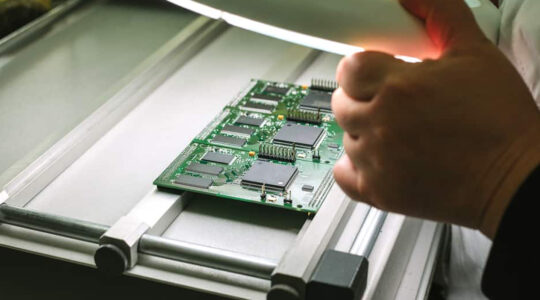
From Concept to Production: Integrating DFM Guidelines into PCB Design Rules
Venturing into the realm of Printed Circuit Board (PCB) design requires a keen understanding and application of Design for Manufacturability (DFM) principles. By seamlessly integrating these guidelines into PCB design rules, it’s possible to streamline the transition from concept to…
Lire la suite
From concept to reality: The automotive prototyping process
Automotive prototyping plays a vital role in the development and production of vehicles. It involves creating a working model of a concept to test its design, functionality, and performance before mass production. Prototyping allows manufacturers to identify and resolve any…
Lire la suite
Slicer machine: the complete guide
When it comes to slicing meat, cheese, or other food products, an industrial slicer machine is an essential piece of equipment for any commercial kitchen. Whether you run a small deli or a large-scale food processing facility, a slicer can…
Lire la suiteWhy make a prototype mold for plastic injections?
Human activities cannot separate from plastic. In particular, for manufacturing plants, plastic is essential to them. Injection has become a popular process for manufacturing plastic parts. Moreover, this method requires an additional tool to obtain a good result. Indeed, the…
Lire la suiteFind a company that specializes in wooden industrial packaging directly online
To transport goods and materials that require great care, the use of a wooden crate is necessary. The use of industrial packaging also allows companies to protect their packages. The personalization of your personalized packaging is done quickly on the…
Lire la suite